by Joanie Harmon, School of Ed & IS News
Director of the Computer Science Equity Project at UCLA Center X shares her expertise on inclusive STEM education with Mahidol University in Thailand.
Looking back at her experiences in the Fulbright Specialist Program at Mahidol University in Thailand, Julie Flapan recalls several “a-ha” moments from her visit this spring to Salaya, a city in Nakhon Pathom Province, west of Bangkok.
The director of the Computer Science Equity Project at UCLA Center X, Flapan leads professional learning, research and policy initiatives in K–12 computer science education, was selected to share her expertise for a project at Mahidol’s Institute for Innovative Learning on “Capacity Building for Inclusive STEM Education in the AI Era.”
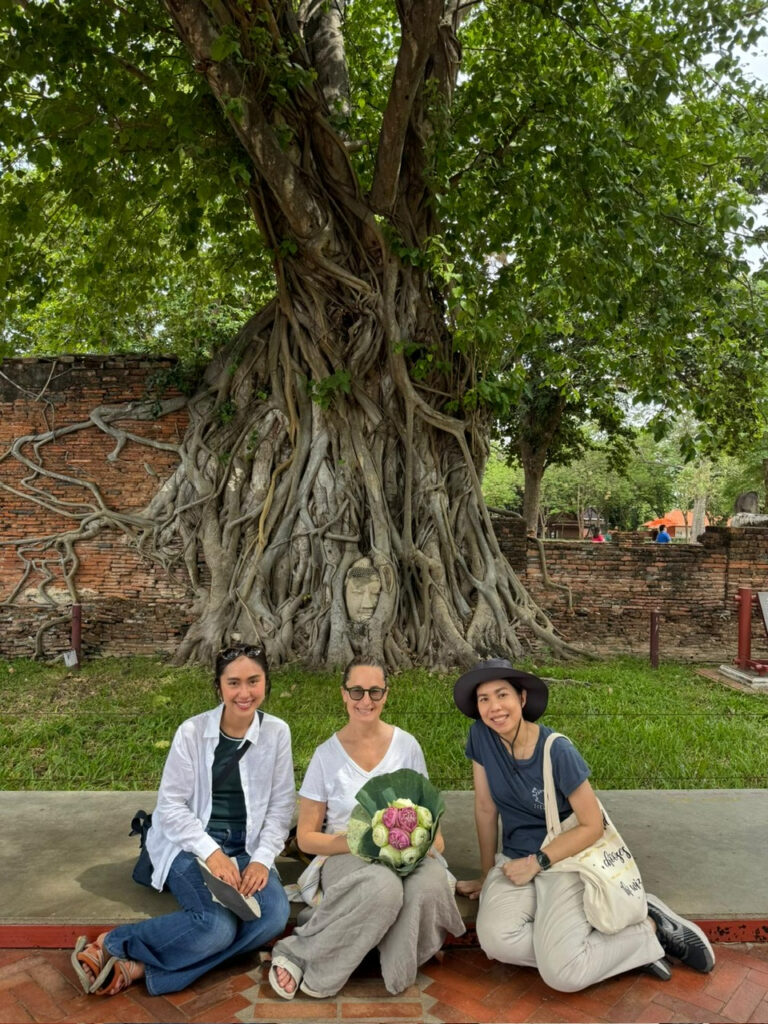
A Bruin who achieved her Ed.D. in UCLA’s Educational Leadership Program and ensuing academic career in the UCLA School of Education and Information Studies, Flapan says that a mid-career Fulbright Specialist assignment was “a beautiful, humbling reminder that no matter where we are in our careers, there is always more to learn, discover, and experience.”
“During my junior year abroad in Spain and other cross-cultural experiences, I discovered how travel cracks open your mind and heart,” she says. “I am deeply grateful for my liberal arts experiences in higher education for instilling in me a lifelong devotion to curiosity, empathy, experiential problem-solving, and the foundational art of learning how to learn.”
As a Fulbright scholar-in-residence, Flapan facilitated a day-long workshop at Mahidol University, “STEM Education in the AI Era: Global Perspectives,” and a two-day public workshop for educators across Thailand, organized alongside Mahidol alumni, education and science faculty, and local teacher networks. The presentation titled, “Future-Ready STEM Education: Design and Ethical AI Integration for All,” connected U.S. perspectives, global research and Thai classroom practice to support meaningful STEM teaching and learning.
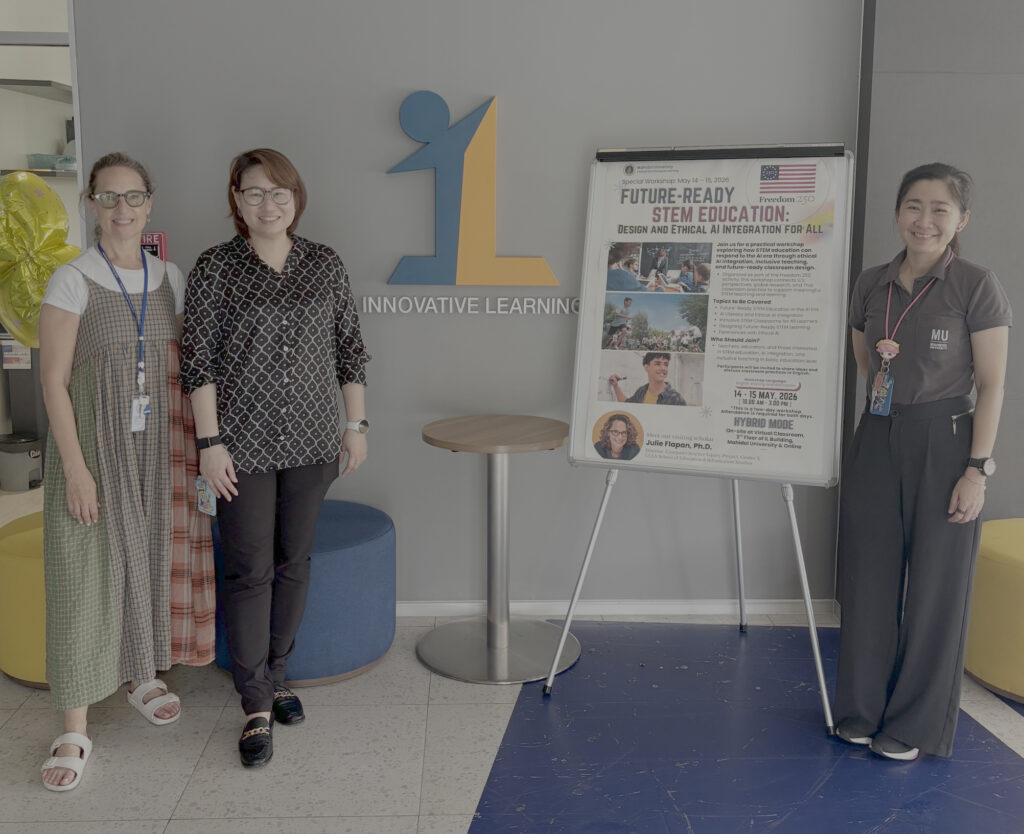
Students from Myanmar, Laos, Bangladesh, Vietnam, Singapore, Cambodia, the Philippines, China, and Korea attended the workshop, which was part of Fulbright’s “Freedom 250” program, which celebrates the 250th anniversary of the Declaration of Independence and Fulbright’s 80th anniversary.
“As a natural tech-skeptic who leans toward critical analysis rather than blind tech advocacy, I intentionally built a workshop focusing on both the promises and perils of educational technology,” says Flapan. “However, my participants quickly challenged me with a powerful truth: being skeptical is fine, but how do we handle the undeniable reality of tech’s everyday presence in our classrooms?”
“Supported by my colleagues at my host, Mahidol University, I had no choice but to depart from my planned agenda and pivot,” she says. “I listened deeply to my students’ actual needs; they appreciated the high-level critique I offered, but they wanted concrete strategies for designing inclusive STEM instruction that integrated AI and emerging technologies into resource-diverse classrooms. Ultimately, I had to practice what I preach: meeting learners where they are.”